The milk on the top shelf keeps going off early, the butter is soft, and yet the lettuce in the crisper freezes solid. A refrigerator with warm and cold zones isn't dying — it's mis-delivering. Cold is made in one place and shipped everywhere else, and when shipping breaks down, the map of warm spots tells you exactly which leg of the route failed.
How cold travels in the first place
Nearly every household refrigerator makes all of its cold on one coil (usually behind the freezer's back wall), then a fan pushes that air through ducts and a motorized damper into the fresh-food section. Vents along the back wall and ceiling distribute it; a return path carries air back. Every warm-spot pattern is a fault somewhere on that route.
Read your warm spots like a map
Top shelf warm, bottom fine: cold air falls, so the top is the first to starve when overall airflow weakens — a fan slowing down, a duct icing over, or vents blocked by that tall cereal box pushed against the back wall. Door shelves warm: partly physics (doors are the warmest real estate; milk doesn't belong there in any fridge), partly a gasket losing its grip — run the dollar-bill test around the seal. One whole section warm while the other is perfect: the damper between compartments stuck closed, or that compartment's own fan quit. Everything slightly warm and getting worse: a different article — that's cooling production, not delivery.
The overloading confession
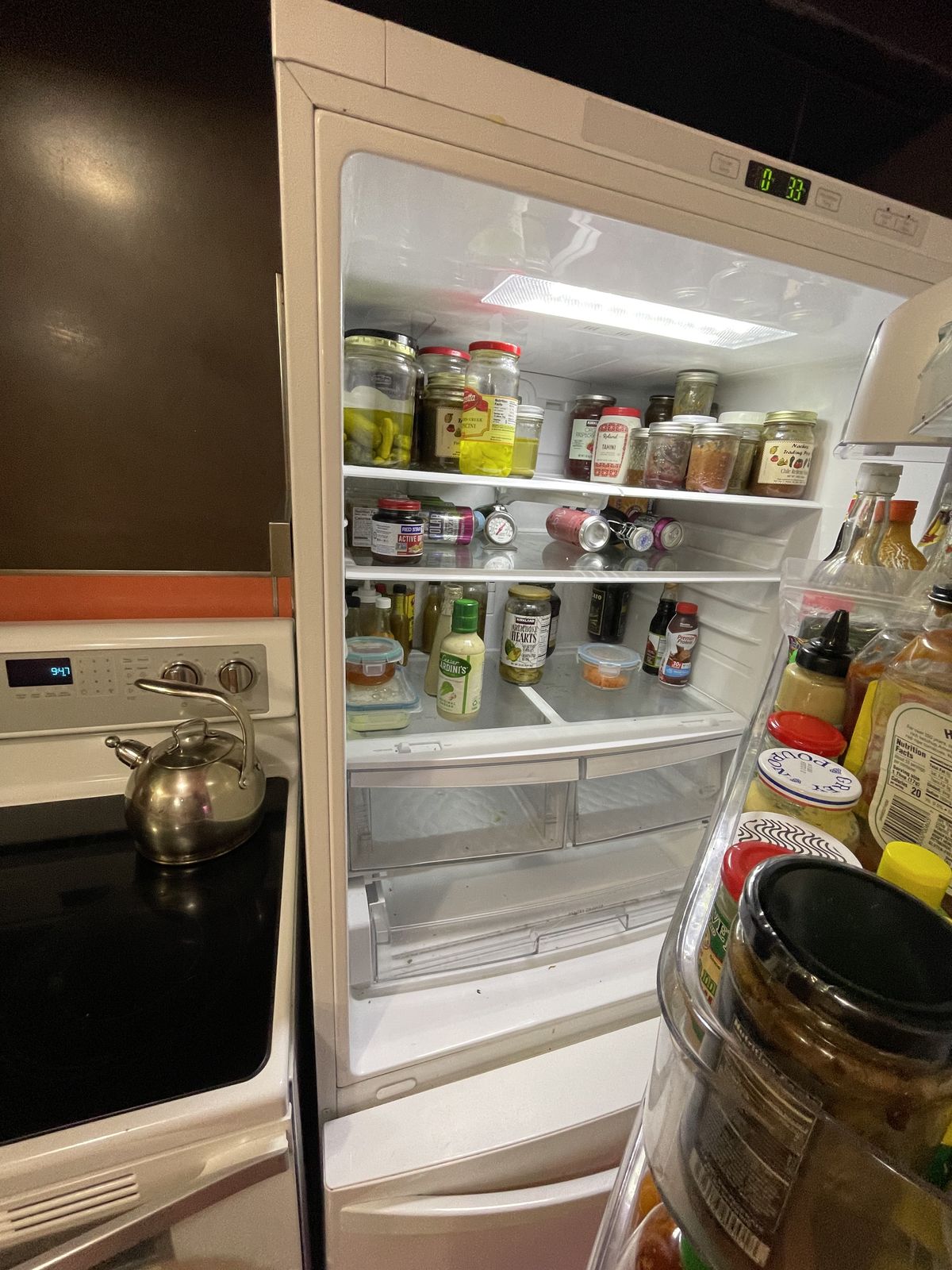
A packed-solid fridge blocks its own vents, and the weekly Costco haul is a genuine airflow event. Leave a finger's width behind items on the top shelf, keep the vent openings visible, and don't press food against the back wall — items touching it freeze, because that's where the coldest air enters. Half the warm-top-shelf calls we run in Boise and Meridian end with a vent excavation and a rearranged shelf, free of charge to anyone who reads this first.
When it's a part
An evaporator fan that whirs weakly or chirps (bearings going), a damper that no longer answers the thermostat (audible test: adjust the temperature and listen for the little motor), frost sealing a duct because defrost has fallen behind — all are standard, meter-testable, same-visit repairs. We check the route in order, quote one fixed price, and your top shelf goes back to being trustworthy.