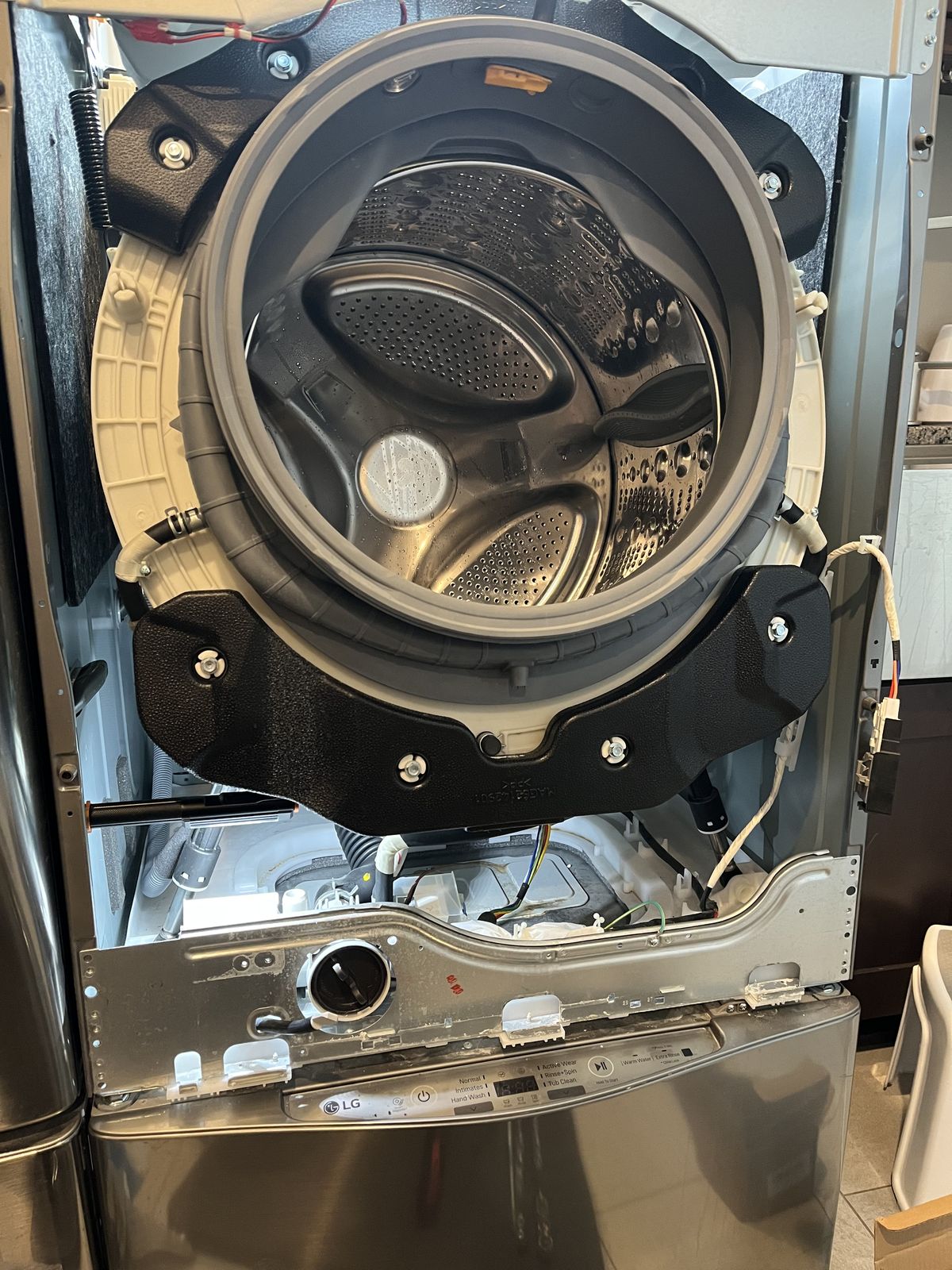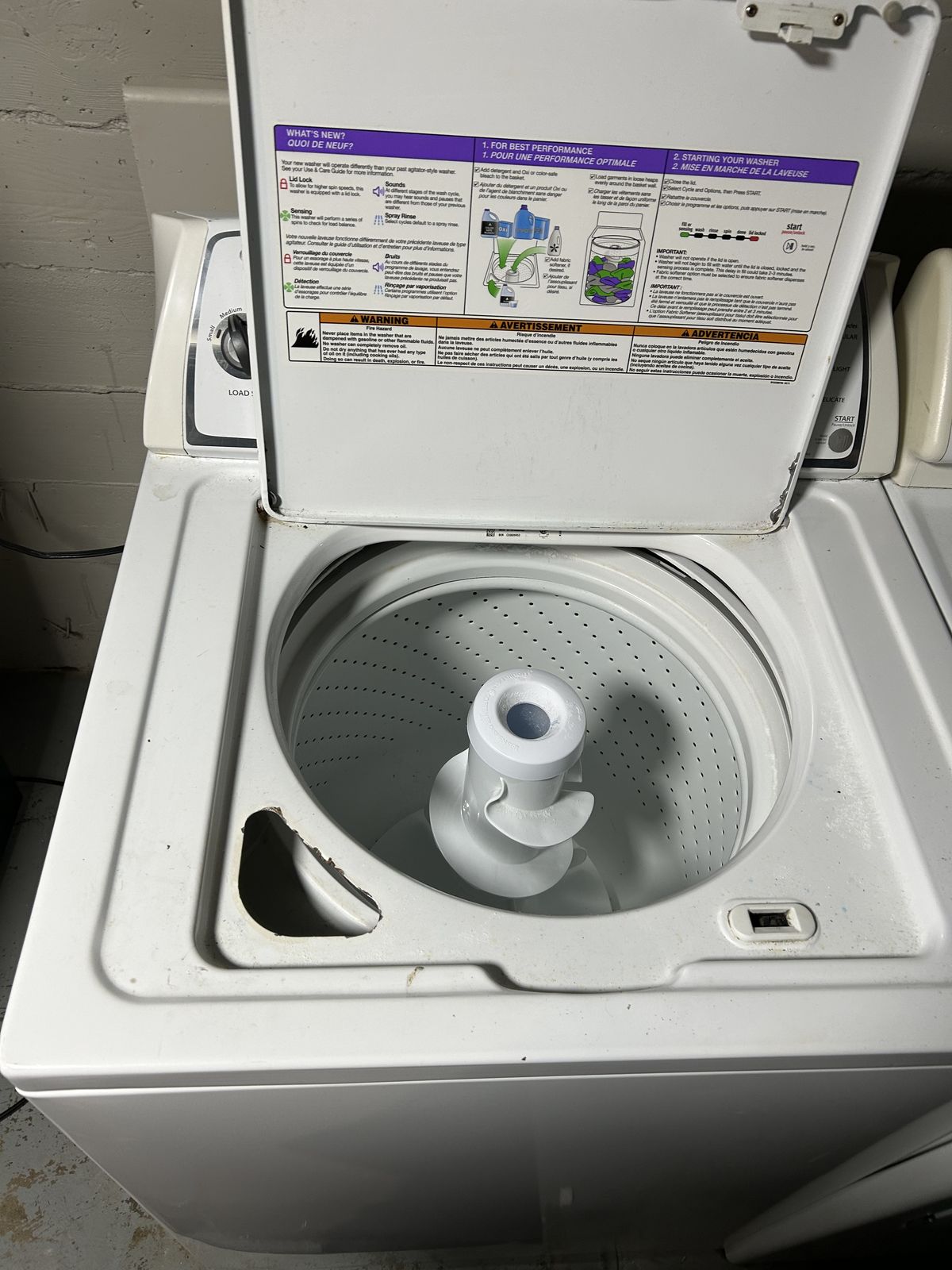
Move here from Seattle or Portland and your washing machine notices before you do. Much of the Treasure Valley runs genuinely hard water — roughly 150–260 PPM depending on whether your neighborhood drinks surface water or groundwater — and hard water quietly rewrites both how you should dose detergent and which parts of the washer wear out first. Here's the local owner's manual we wish came stapled to every machine.
What hardness actually does inside the machine
Dissolved calcium and magnesium precipitate wherever water is heated, sprayed or squeezed: scale crusts the inlet valve screens (slow filling is its signature — a cycle that takes forever to start washing), stiffens the valves themselves until they weep or stick, films the drum and door glass with gray-white haze, and combines with detergent into the curd that clogs dispenser drawers and dulls dark fabrics. Machines with internal heaters (many front-loaders on sanitize cycles) scale their heating elements exactly like a kettle.
The detergent math nobody recalibrates
Detergent instructions assume average water; hard water neutralizes part of every dose. The result in the valley: people use more soap chasing cleaner clothes, and the excess feeds residue and odor. The right move is the opposite of intuition — a quality HE detergent dosed at the hard-water line (most caps have one; almost nobody reads it), or a scoop of washing soda/borax as a booster instead of doubling detergent. Whites turning gray and towels going stiff are hardness symptoms, not detergent-shortage symptoms.
The maintenance rhythm that works here
Monthly: an empty hot cycle with washer cleaner or citric acid to dissolve building scale and film. Quarterly: pull the inlet hoses and check the little valve screens for grit and scale (mineral crumbs there are the valley's calling card). Ongoing: leave the door cracked between loads — less about mildew here than on the coast, but residue films dry harder when sealed in. If your home has a softener, your washer is largely exempt from this article — and if you're deciding whether to install one, the appliance ledger is a real line item in that math.
What we end up repairing
The hard-water hit list from our Boise-metro logs: inlet valves (slow fill, no fill, or the drip that never quite stops), dispenser assemblies cemented with detergent curd, pressure-switch ports narrowed by scale (overfilling or misreading levels), and heater elements on sanitize-cycle machines. All routine, all fixed-quote, all noticeably rarer in softened homes — we'll tell you honestly which camp your symptoms fall in, and the valve screens we can often rescue before the valve itself needs replacing.